
Before You Buy Rural Land in Texas: Water, Septic, Access, Fences and Storm Risk
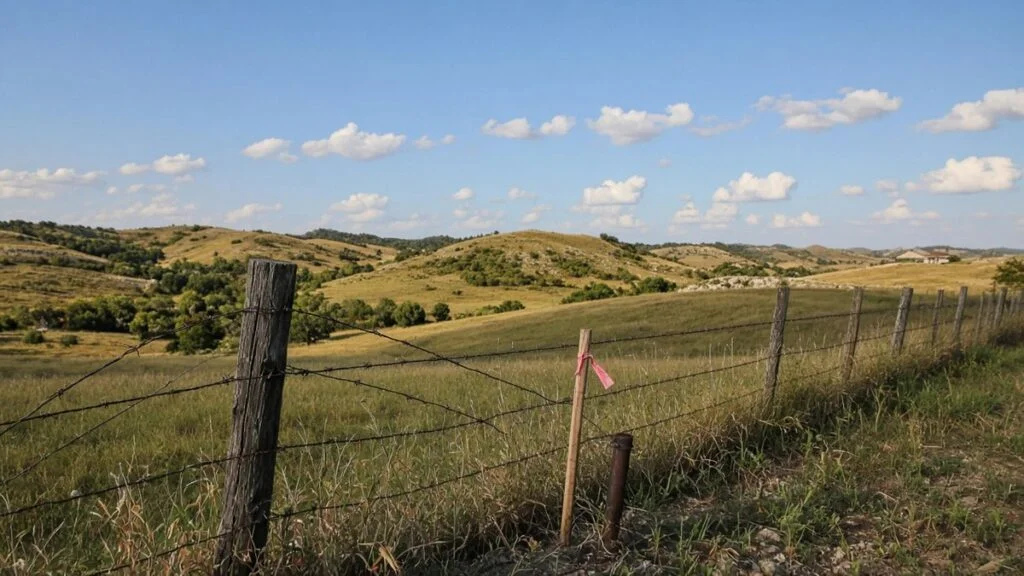
A piece of Texas acreage can look perfect from the gate and still hide a five-figure problem: no legal road in, soil that won’t take a septic system, a well that’s down to a trickle, or a fence line that’s 40 feet off the real boundary. Most of these can be checked before closing, cheaply or for free, if you know who to ask.
This guide walks through the checks in the order we’d do them. It covers both raw land and places with an existing house. Each section ends with who can help, including the contractor lists on this site.
1. Legal access: can you actually get in?
A gate on a county road isn’t proof of access. Before anything else:
- Find out whether the tract touches a public road, and which county or state road it is. Ask the county road and bridge office whether the county maintains that road.
- If access is by easement across a neighbor’s land, get it in writing and recorded. Read the recorded easement. Is it wide enough for a well rig, a septic installer’s equipment, a concrete truck and a utility line? Does it allow utilities at all, or only travel?
- Look at the title commitment. Its exceptions list (often called Schedule B) shows recorded easements, pipeline rights-of-way, restrictions and other things that limit how you can use the land. Ask your title company or a real estate attorney to explain anything you don’t understand.
A survey ties all of this to the ground. On rural land it’s worth paying for a current survey that shows the boundaries, the access, the visible improvements and any recorded easements.
2. Water: where will it come from?
On rural Texas land, water usually means a private well, a rural water supply corporation, hauled water, or rainwater. Each one changes the price of the land.
If there’s an existing well:
– Ask the seller for the state well report (driller’s log), the pump’s age, and any repair records.
– Look the well up yourself. The TCEQ Water Well Report Viewer maps older well reports. The Texas Water Development Board’s Submitted Drillers Reports database and Groundwater Data Viewer show depths, formations and yields reported for wells nearby.
– Make the contract contingent on a water test from an accredited lab and a flow check by a licensed pump installer. Texas doesn’t test private wells, so nobody else will.
If there’s no well:
– See what neighboring wells found. Two wells a few hundred yards apart can hit very different amounts of water, especially in Hill Country limestone.
– Find your groundwater conservation district on the TWDB district map. Call them before closing and ask whether a new domestic or livestock well needs a permit or registration, and what the spacing rules are.
– Ask one or two licensed drillers what depth and cost they’d expect on that tract. Check their licenses with the TDLR license search.
– If a rural water supply corporation serves the area, ask what a new meter costs and how long the wait is. Some have waiting lists or require a line extension at the buyer’s cost.
Where wells are deep or the water is poor, roof rainwater can be a real primary supply. See our rainwater harvesting guide.
Who can help: water well drillers and pump services.
3. Septic: will the soil take a system?
Most rural Texas homes use an on-site sewage facility (OSSF). The soil decides what kind you can build, and the system type drives both the price and the upkeep.
If there’s an existing system:
– Ask the seller for the OSSF permit and the maintenance records. For an aerobic system, also ask for the current maintenance contract.
– Ask the local permitting authority (often a county office acting as TCEQ’s “authorized agent”) what they have on file. TCEQ’s OSSF page for homeowners shows how to find yours.
– Have a licensed pumper open, pump and inspect the tank before closing. It costs little compared with replacing a failed drain field.
If it’s raw land:
– Before you’re committed, have a licensed site evaluator look at the soil where you’d put the house. Heavy Blackland clay, shallow rock and a high water table all push you toward aerobic or engineered systems, which cost more to build and maintain.
– Ask the permitting authority about minimum lot sizes and setbacks. State rules set minimums for some lots, and they’re stricter where the lot also uses a private well. Local rules can add more.
– Plan the septic system and the well together. With standard construction, a new well has to be at least 50 feet from a septic tank and 100 feet from a drain field or spray area. On a narrow tract, those two numbers can decide where the house goes.
Who can help: septic installers, site evaluators and pumpers. Also see Questions You Need to Ask Your Septic Contractor.
4. Boundaries and fences: is the fence on the line?
Old ranch fences often follow the easiest ground, not the surveyed boundary.
- Compare the survey to the fence. If a fence is well off the line, ask a real estate attorney how it could affect the boundary before you close. Don’t assume the fence is the line.
- Walk the perimeter. Note the corners and braces, missing wire, washed-out water gaps, and whether the fence will hold the animals you plan to keep. A pasture fence that holds cattle won’t hold goats.
- Ask which neighbors share fence lines and whether any written agreements exist. Generally, Texas doesn’t make neighbors split the cost of a boundary fence, so any arrangement is private.
- If you’ll run livestock, ask the county whether a local stock law applies. Livestock owners can also face liability when animals get onto state or U.S. highways. See Chapter 143 of the Texas Agriculture Code.
Who can help: ranch and residential fence contractors.
5. Brush, clearing and the land itself
Brush is a cost, and it’s easy to underestimate. A pasture that has gone to cedar or mesquite can cost far more to bring back than the listing photos suggest.
- Find out what you’re looking at. Ashe juniper (cedar) dies when it’s cut at the ground. Mesquite and redberry juniper resprout and need different treatment. See our winter cedar clearing guide.
- Get a rough clearing estimate before you make an offer if you’ll need a homesite, a road or open pasture. Ask whether it’s priced by the acre or the hour, and what happens to the debris.
- Look for erosion, gullies and old dumps. Ask what’s buried. Older rural tracts sometimes have trash pits or old tanks.
- Check the stock tank, if there is one: the dam’s condition, leaks, and whether it holds water through summer. See our stock tank and pond guide.
- Ask about feral hogs. Rooting damage to pasture and tanks is common across much of Texas. See our feral hog control plan.
Who can help: land management and clearing contractors.
6. Flood, storm and fire risk
- Flood. Look up the tract on FEMA’s Flood Map Service Center. A floodplain affects where you can build, what insurance costs, and sometimes whether a lender will finance. Also look at the ground itself. Low-water crossings on the only road in can cut you off after a big rain even when the homesite is high and dry.
- Wind and storms. On the coast and in East Texas, large pines and oaks near a homesite are a hurricane risk. Across North and Central Texas, hail and tornadoes are the bigger worry. Ask an insurance agent for a quote before closing.
- Wildfire. Heavy cedar near a house is a fire risk in dry years. Check the Texas A&M Forest Service for local fire conditions, and plan clearing around any future homesite.
Who can help: storm cleanup and tree removal crews for dead or leaning trees near a homesite.
7. Taxes, minerals and pipelines
- Agricultural or wildlife valuation. Many Texas tracts carry a special appraisal that lowers property taxes. Ask the appraisal district what valuation the tract has now and what you must do to keep it. If the land changes to a non-qualifying use, rollback taxes can be owed for prior years, plus interest. The Texas Comptroller’s agricultural and timber page explains the rules.
- Mineral rights. In Texas, minerals are often severed from the surface. Your title review should tell you what you’re getting and what’s already leased. A severed mineral estate can come with surface-use rights for the mineral owner.
- Pipelines and buried utilities. Recorded pipeline easements appear in the title commitment. Before any digging, including fence posts, call Texas 811. The Railroad Commission of Texas has public maps of pipelines and wells.
8. Utilities and the cost to get them in
- Electricity. Ask the electric provider or co-op what it would cost to bring power to your homesite. Long line extensions can be expensive.
- Internet and cell coverage. Check this at the homesite, not at the gate.
- The full-cost estimate. Before you make an offer, total up the access road, clearing, well, septic, power and fence. That number, not the price per acre, tells you what the land really costs.
A one-page checklist
| Item | Who to ask | Before offer | Before closing |
|---|---|---|---|
| Legal access & easements | Title company, county road office | ✔ | ✔ |
| Survey | Licensed surveyor | ✔ | |
| Water source, nearby well depths | TWDB / TCEQ viewers, groundwater district, drillers | ✔ | |
| Existing well test & flow check | Accredited lab, licensed pump installer | ✔ | |
| Septic records or soil evaluation | Permitting authority, site evaluator | ✔ | ✔ |
| Tank pumping & inspection | Licensed pumper | ✔ | |
| Fence vs. boundary | Survey, fence contractor | ✔ | |
| Clearing estimate | Land clearing contractor | ✔ | |
| Flood zone & insurance quote | FEMA map, insurance agent | ✔ | ✔ |
| Ag/wildlife valuation | Appraisal district | ✔ | |
| Minerals, pipelines | Title review, RRC maps | ✔ | |
| Power line extension | Electric provider / co-op | ✔ |
This guide is general information for Texas landowners and isn’t legal, tax or engineering advice. For a specific property, talk to your title company, a real estate attorney, and the licensed professionals listed above.