
Building on Raw Texas Land: The Order to Do Clearing, Well, Septic and Fence
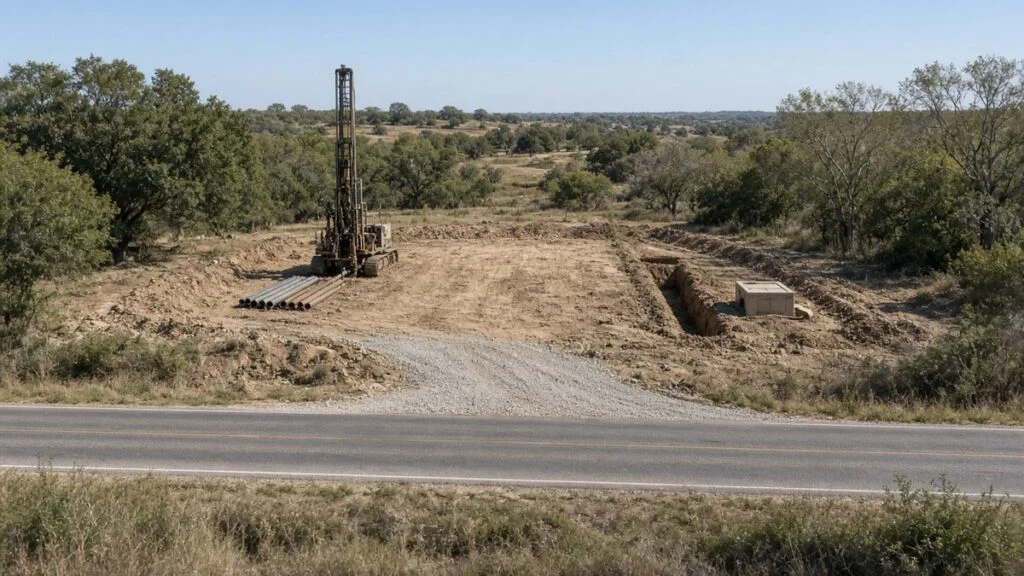
You’ve closed on raw acreage and you want a house, a barn or just a usable homesite. The jobs are familiar: clear brush, cut a road, drill a well, put in septic, run power, build fence. What surprises people is how much the order matters. Do them out of sequence and you end up re-clearing ground, moving a well that’s too close to a drain field, or tearing out new fence so a well rig can get through.
Here’s the order that saves the most money and rework on a typical Texas tract, and why each step comes where it does.
Step 1: Plan on paper first
Before any equipment shows up, sketch the whole site on a copy of your survey or an aerial photo:
- Homesite and barn. Put them on high, well-drained ground, out of any mapped floodplain (FEMA Flood Map Service Center), and away from low-water crossings.
- The drive. Plot the shortest practical route from the road, with room for a well rig, a concrete truck and a septic installer’s equipment.
- The septic area, downslope from the house, in the best soil you have.
- The well, upslope from the septic area if possible, and outside the required separation distances.
- Power. Ask your electric provider or co-op where the line would come from and what the extension would cost.
- Fence lines, gates and water gaps.
The well and septic system have to fit around each other. With standard construction, Texas rules require a new water well to be at least 50 feet from a septic tank, 100 feet from a drain field or spray area, and 50 feet from property lines (see TDLR’s well location guidance). An aerobic system’s spray area is often bigger than people expect. On a narrow tract, these distances can decide where the house can go.
Step 2: Septic site evaluation and permit (before clearing the homesite)
It seems backward, but get the soil evaluated before you clear and grade the homesite. A licensed site evaluator needs to see undisturbed soil. Heavy equipment can compact or strip the very ground you planned for a drain field.
- Find your permitting authority (often the county, acting as TCEQ’s “authorized agent”) through TCEQ’s OSSF homeowner page. Ask what they need for a permit.
- Let the soil pick the system. Blackland clay, shallow rock or a high water table usually means an aerobic or other engineered system, not a conventional drain field. Budget for it, and for the maintenance contract that comes with an aerobic unit.
- Protect the septic area. Once you know where it is, stake it and keep trucks and equipment off it for the rest of the project.
Our septic services page covers licensing, costs and questions to ask, and lists installers and site evaluators by county.
Step 3: Call 811, then clear and cut the road
Before any dirt work, contact Texas 811 so buried pipelines and utilities are marked. Many rural tracts have them, and the title commitment may not show every line.
Then clear only what the plan needs:
- The drive, wide enough for heavy trucks, with a solid base where the soil is clay. A rig stuck in mud on drilling day costs you money.
- The homesite and barn pad, plus a working margin around them.
- The well site, with a clear path for the rig.
- Fence lines, if you’ll fence soon. Ask for these at the same time so the crew only comes out once.
Timing. Late fall through early spring is the usual window for cedar work: cool weather, dormant grass, easier access. See our winter cedar clearing guide.
Debris. Decide in advance whether brush gets mulched, stacked or burned. Burning has to follow TCEQ’s outdoor burning rules and any county burn ban (check the Texas A&M Forest Service burn ban map).
What to keep. Leave shade trees near the house site and some brush for wildlife and erosion control. Clearing everything is rarely the cheapest option in the long run.
Find crews on our land management and clearing page.
Step 4: Drill the well
With the road in and the septic area staked, the well can go in without crossing the septic site:
- Check nearby wells first. Look up what’s been drilled near you in the TWDB Submitted Drillers Reports database, and ask each driller what they’ve found on nearby jobs.
- Ask your groundwater district about permits or registration (TWDB district map).
- Hire a TDLR-licensed driller and check the license with the TDLR license search. Ask for an itemized bid: drilling, casing and grout, pump, pressure tank and wiring.
- Get a copy of the state well report, and test the water at an accredited lab before you rely on it.
Drilling before the house is framed also tells you early whether you’ll need water treatment, a storage tank, or a rainwater system as backup. Better to know that before the budget is spent.
Our water well page lists drillers and pump services by county. Also read How Much Does a Water Well Cost? and Read This Before Hiring Someone to Put In Your Well.
Step 5: Power, then build
Run power once the house site, well and septic locations are fixed. That way the trench and poles go where they’re needed, and the well pump has power. Many electric providers have their own timelines, so ask early.
During construction:
– Keep the septic area fenced off with temporary fencing. Concrete trucks and dumpsters are the most common way new drain-field sites get damaged.
– Install the septic system near the end of construction, as your permitting authority allows, so it isn’t driven over. Have the final inspection done before you move in.
Step 6: Fence last (mostly)
Permanent perimeter and cross fence usually goes in last, once heavy trucks no longer need wide access. Two exceptions:
- If you’re bringing livestock right away, build the perimeter early and put in wide gates (16 feet or more) where trucks will need to pass.
- If feral hogs are a problem, plan hog-proof fence around gardens and the house yard from the start. See our feral hog control plan.
Before you build on a boundary, confirm the line with your survey. Generally, Texas doesn’t require neighbors to split boundary-fence costs, so put any agreement in writing. Find ranch and residential fence crews on our fencing page.
Step 7: Plan for upkeep and the next storm
- Septic. For an aerobic system, keep the maintenance contract and inspection reports. Pump conventional tanks on schedule (TCEQ suggests every three to five years).
- Well. Test the water once a year, and get ready before the first hard freeze (see our pre-freeze well checklist).
- Trees. Have dead or leaning trees near the house taken down before storm season. Keep a list of local storm cleanup crews on hand, and read the scam warnings before you need them.
The short version
- Plan the whole site on paper: house, drive, septic, well, power, fence.
- Get the soil evaluated and the septic permit started, before you clear the homesite.
- Call 811. Clear only the drive, pads, well site and fence lines.
- Drill and test the well.
- Run power, then build. Keep trucks off the septic area.
- Fence last, unless livestock or hogs can’t wait.
- Keep up the septic, test the well, and deal with hazard trees before storm season.
This guide is general information for Texas landowners. Rules vary by county and groundwater district, so confirm permits and setbacks with your local authority and the licensed professionals doing the work.