
Rainwater Harvesting on Texas Land: Sizing, Rules and Tax Breaks
In much of the Hill Country, the Trans-Pecos and parts of the Rolling Plains, drilling a well can mean hundreds of feet of rock, a big check, and still no promise of good water. More Texas landowners are collecting rain off a barn or house roof instead, either as their main supply or as a backup to a well that struggles in August. Texas makes this easier than most states, with clear legal protections and a tax break on the equipment. Here’s how to plan a system that actually meets your needs.
Start With the Math: How Much Water Can a Roof Catch?
Each inch of rain on each square foot of roof yields about 0.62 gallons. For every 1,000 square feet of roof, one inch of rain gives you about 620 gallons before losses. The Texas Manual on Rainwater Harvesting from the Texas Water Development Board (TWDB) suggests planning for some loss to splashing, evaporation and first-flush diversion, so many designers figure on collecting 75 to 90 percent of that.
That makes rainfall where you live the biggest factor. Average annual rain runs from more than 50 inches in far East Texas to under 12 inches around El Paso. A 2,000-square-foot barn roof in the Hill Country, at about 30 inches a year, could catch around 30,000 to 33,000 gallons in an average year. The same roof in the Big Bend region might catch a third of that.
Then compare that supply to what you use. The U.S. Geological Survey estimates that a typical American uses about 80 to 100 gallons a day at home. Careful rainwater households often get by on far less with low-flow fixtures and no lawn irrigation. Livestock needs vary, but a cow can drink 15 to 30 gallons or more a day in summer heat. Add it up for the whole year, not just a single month.
Size Storage for the Drought, Not the Average
The hardest part of a Texas rainwater system is the long dry stretch. Rain often comes in heavy spring and fall storms with months of little rain in between. Your tank has to carry you through those gaps. The TWDB manual walks through a month-by-month water balance. You start with average monthly rainfall, subtract your monthly use, and size storage so the tank never runs dry in a typical year. Many people add a margin for drought years like 2011 or 2022.
For a household relying only on rain, that often means 20,000 to 40,000 gallons or more of storage, plus a roof large enough to fill it. Metal barns, porches and carports are often added just to increase collection area.
The Parts of a System
- Roof. Metal roofing, especially Galvalume or baked enamel, gives the cleanest water. Asphalt shingles and treated wood shed grit and chemicals, so they’re less suited to drinking water.
- Gutters and screens. Leaf screens keep debris out of the downspouts.
- First-flush diverter. Sends away the first few gallons of each rain, which carry most of the dust, pollen and bird droppings.
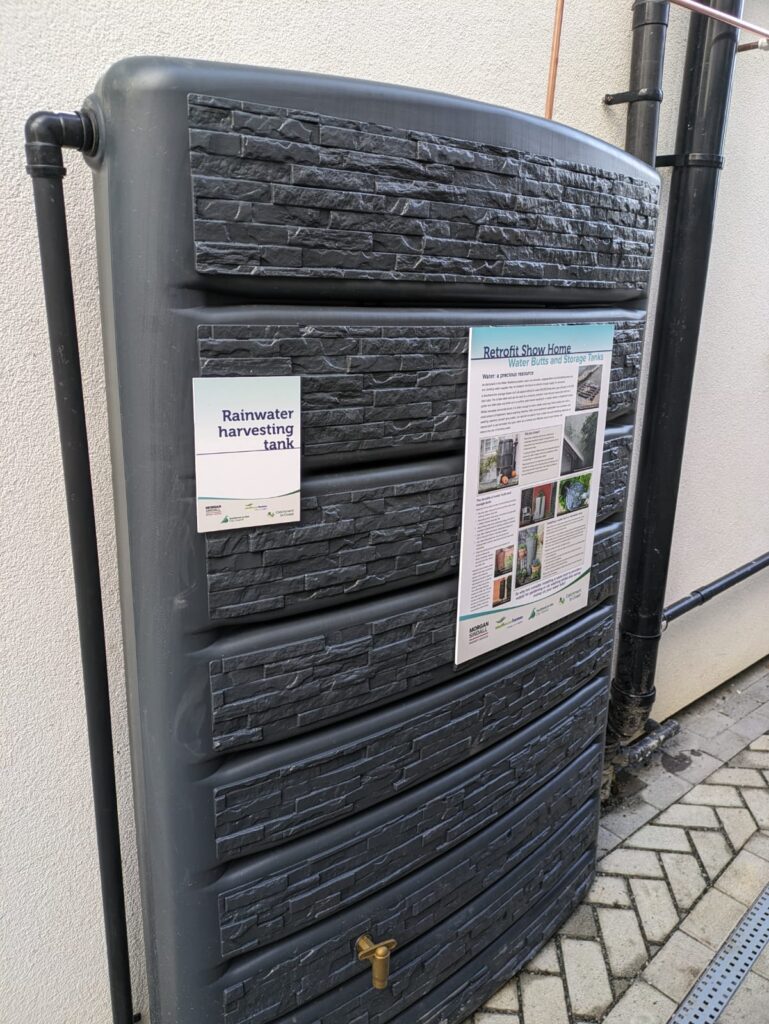
- Storage tank. Common options are polyethylene, fiberglass, galvanized steel with a liner, ferrocement, and concrete. Tanks should be opaque to block algae, and screened and sealed against mosquitoes, rodents and sunlight.
- Pump and pressure tank. Moves water to the house or troughs, similar to a well system.
- Treatment. For drinking water, this usually means sediment filters, then UV disinfection or another proven method.
Put the tank on a level, compacted pad that can carry the weight. Water weighs about 8.3 pounds a gallon, so a 10,000-gallon tank holds over 40 tons. Many water well and pump contractors install and service rainwater pumps and pressure systems, and some tank dealers handle the full installation.
Drinking Rainwater Safely
Rain is naturally soft and low in minerals, but it picks up bacteria and debris from the roof and gutters. If you plan to drink it:
- Filter and disinfect it. Most home systems use a filter of 5 microns or smaller ahead of an ultraviolet light.
- Test it regularly at an accredited lab, just as you would a private well. Texas A&M AgriLife’s Texas Well Owner Network trainings cover testing and treatment.
- Clean gutters and first-flush diverters, and check tank screens every season.
If your house is also connected to a public water system, Texas rules require the two systems to be kept separate so rainwater can’t flow back into the public lines. Use a licensed plumber, which you can verify with the Texas State Board of Plumbing Examiners, and tell your water provider before you connect anything.
What Texas Law Says
Texas actively supports rainwater harvesting. Three state laws are worth knowing:
- Sales tax exemption. Section 151.355 of the Texas Tax Code exempts rainwater harvesting equipment and supplies from state sales tax. Ask your supplier about the exemption certificate.
- Possible property tax exemption. Section 11.32 of the Tax Code lets local taxing units exempt part of the value added by water conservation projects. Whether your county or city offers this is up to them, so ask your appraisal district.
- HOA protections. Section 202.007 of the Texas Property Code generally keeps property owners’ associations from banning rain barrels or rainwater harvesting systems. They can still regulate things like size, type and screening. This matters on smaller acreage tracts with deed restrictions.
Rooftop rainwater generally does not require a water right in Texas. Damming a creek or draw is a different matter. See our guide to stock tanks and Texas water rights before you build anything that catches runoff from the ground.
Rainwater for Livestock and Wildlife
You don’t have to be off-grid to benefit. Many ranchers put a metal “rain barn,” a simple open shed roof feeding a tank and float-valve trough, in pastures far from a well or power. Wildlife managers build similar guzzlers for quail and deer. These setups need no treatment and can be as simple as a roof, a gutter, a tank and a trough. They also take pressure off a well during drought.
Learn More and Find Help
The TWDB rainwater harvesting program has the state manual and other publications. Texas A&M AgriLife’s rainwater harvesting site offers sizing guides, drinking-water information and classes. Your county AgriLife Extension office can point you to local demonstration sites.
If you’re deciding between a well and rainwater, or want both, the contractors on our Water Well page can talk through local groundwater depth and quality. Many also install the pumps, pressure tanks and filtration a rainwater system needs. For a sense of what drilling costs and what to ask a driller, see How Much Does a Water Well Cost in Texas? and Read This Before Hiring Someone To Put in Your Well. A water supply that works through a Texas drought is one of the most valuable things you can add to your land.